34
Signal-loss events traced
Mapped by time and device from the controller logs before anything was changed.
34 signal-loss events, one failing uplink, and a 40-device network back to 100% Wi-Fi success.
34
Signal-loss events traced
Mapped by time and device from the controller logs before anything was changed.
1
Root cause
Every drop traced to a single failing uplink, not to the access points or the client devices.
100%
Wi-Fi connection success
Measured after the uplink fix and the channel retune.
Operating Context
An unreliable small-business network became a stable one by finding the real cause: 34 signal-loss events traced to one failing uplink, fixed, and verified at 100% Wi-Fi connection success.
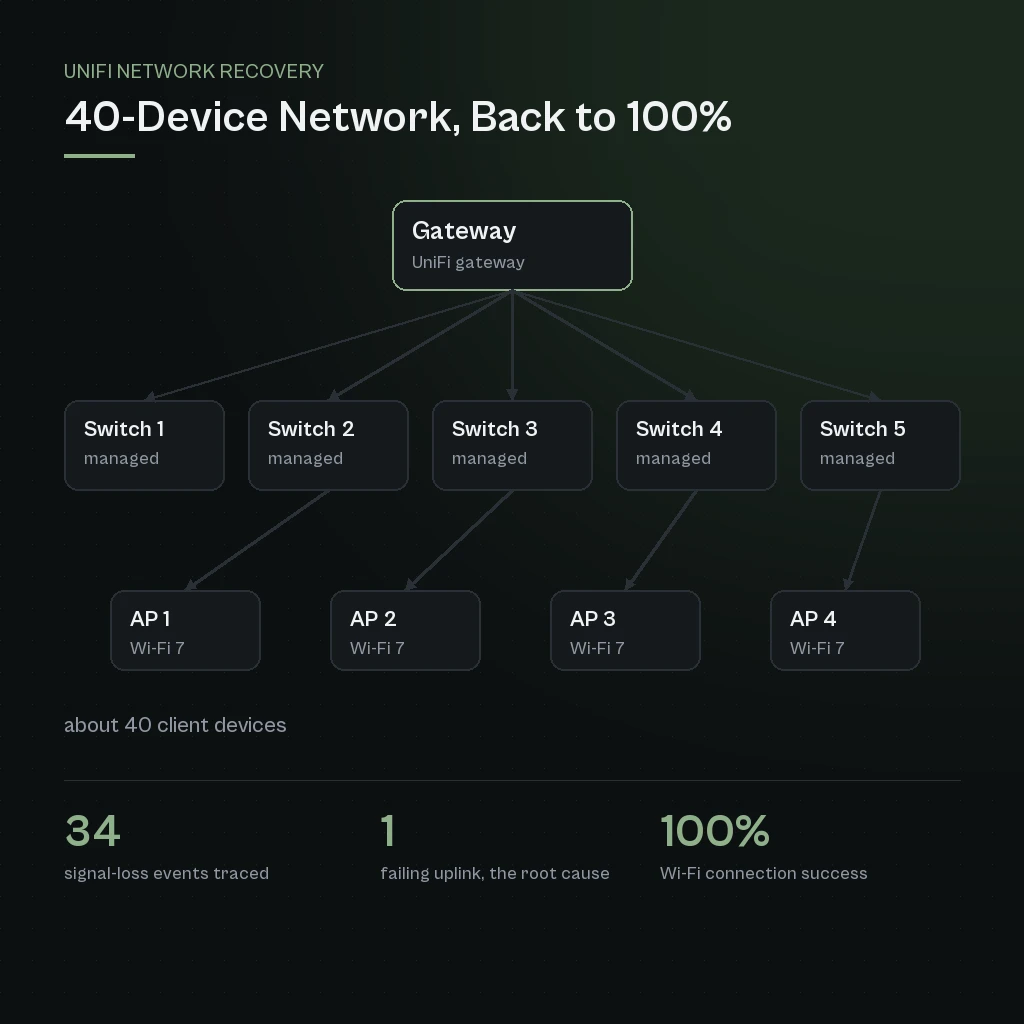
A client's UniFi network (gateway, 5 managed switches, 4 Wi-Fi 7 access points, about 40 devices) kept dropping Wi-Fi and VPN connections, and nobody could say why.
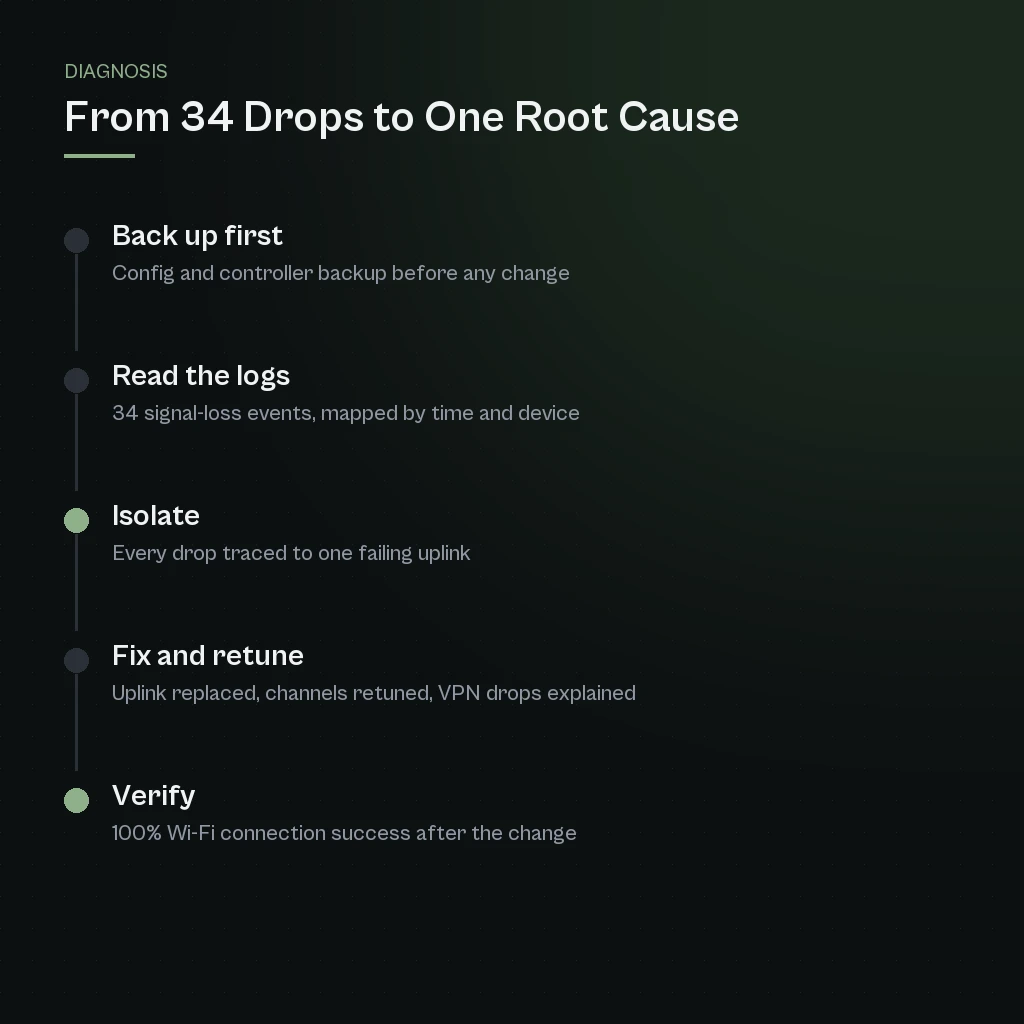
Backed up the configuration first, then read the controller logs and mapped 34 signal-loss events by time and device. Every drop traced back to one failing uplink. Replaced the uplink, retuned the Wi-Fi channels and explained the VPN drops to the client in plain language.
Wi-Fi connection success back to 100%, with the root cause found instead of guessed, and nothing lost along the way because the backup came first.
Architecture
Configuration and controller backup before touching anything.
34 signal-loss events mapped by time, device and access point.
The pattern pointed to one failing uplink as the single root cause.
Uplink replaced, channels retuned, VPN drops explained, success verified at 100%.
Delivery Conditions
Judgment
A clean restore point meant every change could be undone, so the business never risked a longer outage.
Mapping all 34 events showed one shared cause, which avoided replacing access points that were working fine.
The client understood what failed and why the VPN dropped, so they trust the network again.
Similar Operational Problem?